Italian football has a remarkable talent for making its crises feel like other people’s problems.
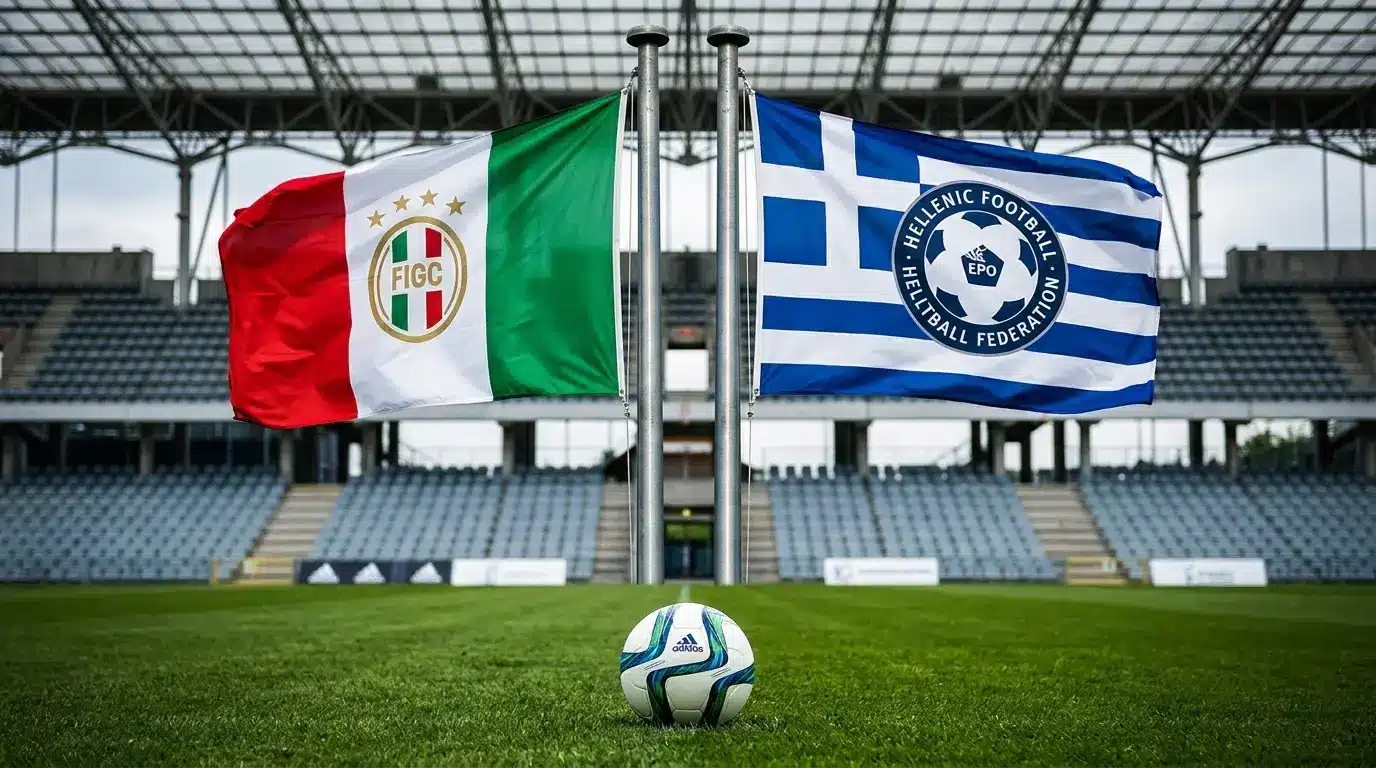
The latest chapter arrives not from the courts of Milan or the corridors of the FIGC, but from an increasingly fractious negotiation with the Hellenic Football Federation over a June friendly that, by rights, should have been the simplest item on the calendar.
It is not simple. It is, at this point, barely confirmed.
Italy’s Youth Experiment Strains Relations with Greece
According to reports from TMW, the Greek football federation has been left frustrated by Italy’s intention to field a side made up primarily – and potentially entirely – of U21 players for their scheduled June 6 friendly, played away from home in Greece.
Some outlets have gone further, suggesting the match could be cancelled altogether.
Italy’s situation demands context.
The Azzurri will not be at the 2026 World Cup, following the play-off final defeat to Bosnia and Herzegovina at the end of March that prompted Gennaro Gattuso‘s resignation as head coach – a moment that crystallised the depth of the current crisis in Italian football, which landed with the weight of a verdict the game had been dreading.
With no permanent successor yet appointed, U21 boss Silvio Baldini has been tasked with taking charge of the senior squad for two June friendlies: first against Luxembourg on the 3rd, then Greece on the 6th.
Baldini has been unambiguous about his intentions. He will, in his own words, “only call up players from the U21s.”
Captain Gianluigi Donnarumma has reportedly made himself available, but Baldini has not committed to including him.
The FIGC’s mandate is equally transparent: valorizzare i giovani – this window is about talent identification, not results.
Greece’s Frustration: More Than a Scheduling Dispute
For the Hellenic Football Federation, this is not an abstract philosophical disagreement. Greece’s Nations League campaign begins in September.
They wanted a serious test against experienced opponents, and according to reporting via Sportime, they specifically sought a friendly against a top-15 FIFA-ranked opponent fielding a full senior squad.
The Italy match was internally budgeted as a Category A home international – higher commercial expectations, premium ticket pricing, marquee occasion.
What they are apparently being offered instead is something resembling an extended U21 training camp with an international fixture attached.
Greece have already confirmed their squad for the June window, and the telling detail – noted by TMW – is that their official announcement references only “June friendlies.” Italy goes unmentioned.
Whether that is diplomatic ambiguity or a quiet signal of what EPO officials privately expect, it is not reassuring.
According to NovaSports, broadcasters have already raised questions about whether a de facto youth fixture would trigger renegotiations of rights fees – an entirely reasonable concern given what was sold to rights holders.
Representatives from both federations have been in contact since last week, TMW reports, searching for “a solution.”
The clock is unforgiving. The match is scheduled in just over a fortnight. The window to find alternative opponents, should Greece walk away, is already closing.
The Pattern Behind the Dispute
Strip away the scheduling particulars and what remains is a recognisable portrait of Italian football in institutional freefall.
This is a federation navigating the wreckage of another failed World Cup cycle without a permanent head coach, deploying its U21 setup as a stopgap senior programme, and apparently surprised that partner federations object to the arrangement.
The FIGC’s decision to treat these June dates as a bridge toward a permanent appointment – experimentation dressed as preparation – is entirely understandable from an internal development perspective.
Italian pundits on Sky Sport Italia and Radio 24 have praised the commitment to youth after years of conservative squad selection. But what reads as renewal at home reads as disrespect abroad.
Italy’s complicated relationship with international football governance is not new.
The FIGC has form when it comes to creating friction beyond its borders, as the ongoing dispute with UEFA over political interference in Italian football structures demonstrates with uncomfortable clarity.
The institution lurches from one external conflict to the next, treating each as isolated, understanding none as systemic.
Baldini’s squad selection – reportedly built around players like Cher Ndour and Simone Pafundi from Italy’s recent U21 European qualifiers – may well be the correct long-term call.
The problem is that international football does not operate on long-term goodwill. Greece prepared a marquee occasion. Italy offered a training exercise.
Whether the match survives the next fortnight depends on whether both federations can find language that satisfies Greece’s competitive need and Italy’s developmental ambition simultaneously.
That is a narrow corridor. And Italy, right now, is not a federation known for threading needles.