The world of Italian football punditry is no stranger to passion, but Paolo Di Canio recently took things to a physical level. During a post-match broadcast analyzing the latest round of Champions League fixtures, the former West Ham and Lazio icon became so animated regarding the technical disparity between Serie A and Europe’s elite that […]
The world of Italian football punditry is no stranger to passion, but Paolo Di Canio recently took things to a physical level.
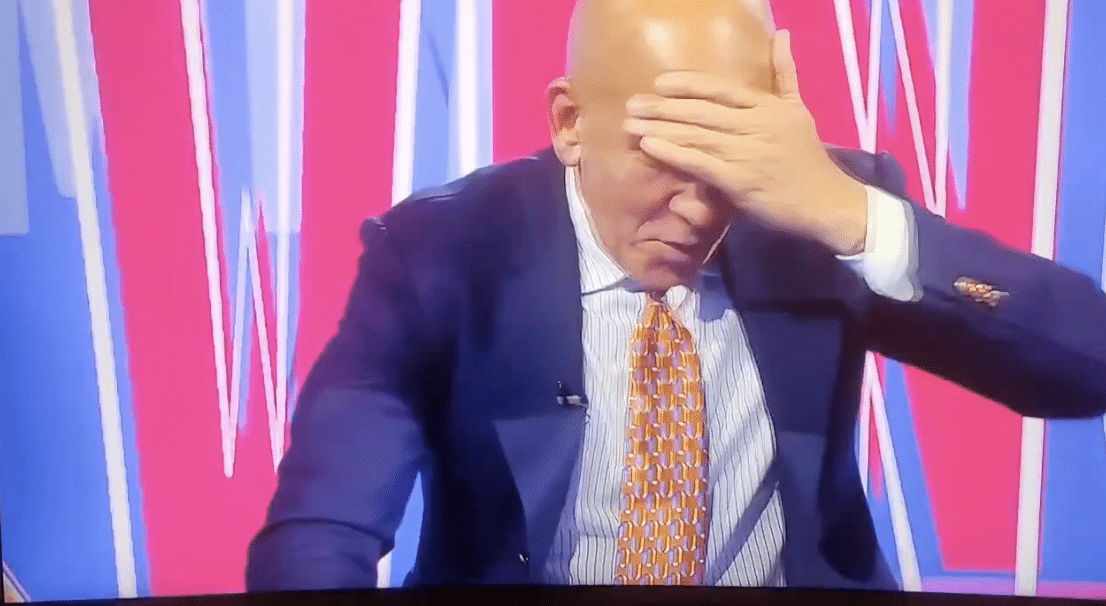
During a post-match broadcast analyzing the latest round of Champions League fixtures, the former West Ham and Lazio icon became so animated regarding the technical disparity between Serie A and Europe’s elite that he reportedly struck his head against the studio table in frustration.
While the moment quickly turned into a viral sensation across social media, the underlying message was somber.
Di Canio’s “head-butt” to the table wasn’t just theatrics; it was a physical manifestation of the frustration felt by many observers who believe Italian football is falling behind the breakneck pace and technical precision seen in the Premier League and at clubs like Real Madrid or Manchester City.
Is the Technical Gap Between Serie A and the Champions League Growing?
The core of Di Canio’s argument—and the reason for his viral outburst—centers on the “intensity gap.”
For years, Serie A has been praised for its tactical sophistication.
However, the modern Champions League has evolved into a competition defined by high-pressing, rapid transitions, and individual technical excellence at high speeds.
When Italian teams transition from domestic league play to the European stage, they often look “stuck in mud” compared to their counterparts.
Di Canio’s frustration stems from the fact that Italian clubs often prioritize defensive shape and slow build-up, which rarely succeeds against the relentless energy of elite European sides.
To compete at the highest level, Italian football must find a way to marry its tactical heritage with a more modern, athletic approach.
Nothing to see here, only Paolo Di Canio cracking his head in blood on the desk during post match Champions just over a football debate, as a demonstration of frustration.
Fabio Capello stood up to hand him a tissue to halt bleeding pic.twitter.com/H9ER1UowGE
— Tancredi Palmeri (@tancredipalmeri) April 15, 2026
Why Italian Clubs Struggle to Reach the Next Level
There are several factors contributing to the struggles Di Canio highlighted.
First and foremost is the financial disparity.
While the Premier League benefits from astronomical TV rights deals, Serie A clubs have struggled with aging infrastructure and limited commercial revenue.
This financial ceiling prevents Italian teams from keeping their best young talents and makes it difficult to recruit world-class players in their prime.
Furthermore, the “rhythm” of the Italian league is fundamentally different.
Referees in Serie A tend to whistle more frequently for fouls, leading to a fragmented game with less “effective playing time.”
In the Champions League, officials often let the game flow, a style that favors teams conditioned for 90 minutes of uninterrupted high-intensity football.
Can Serie A Close the Gap with the Premier League?
The path back to European dominance for Italian football is not impossible, but it requires a cultural shift.
Clubs like Inter Milan and Atalanta have shown that Italian teams can compete when they embrace a more proactive, European style of play.
Inter’s recent deep runs in the competition prove that with the right coaching and recruitment, the gap can be narrowed.
However, as Paolo Di Canio’s passionate reaction suggests, there is still a long way to go.
Until Serie A can produce a weekly product that matches the physical and technical demands of the Champions League, Italian fans may continue to see their giants struggle on the biggest stage.
For now, the “head-butt” remains a symbol of a nation’s desperation to return to the summit of world football.