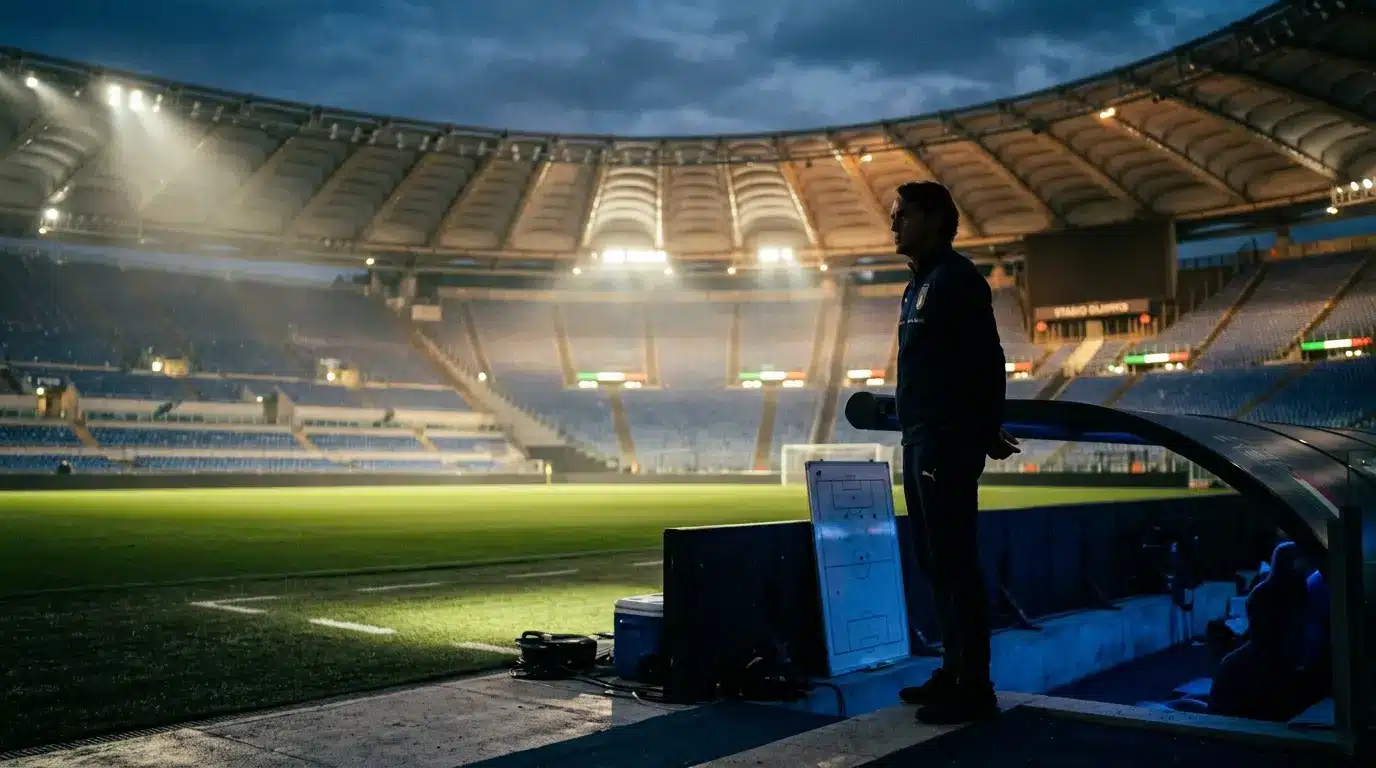
The Azzurri need a coach. That sentence, stark and embarrassing for a nation of Italy’s footballing stature, has been true for too long – and now the name being whispered with the most reverence is also the most improbable: Pep Guardiola.
Italy’s exit from the World Cup play-off in March – a defeat to Bosnia and Herzegovina that confirmed a third consecutive absence from football’s greatest stage – has forced the FIGC into yet another existential reckoning.
The last time the Azzurri appeared at a World Cup was Brazil 2014.
The debate over who leads them next has now, somehow, conjured the name of the finest club coach of his generation.
The Guardiola Question: Why This Link Has Traction
The rumour is not entirely without foundation, and dismissing it too quickly would be to misread both the man and the moment.
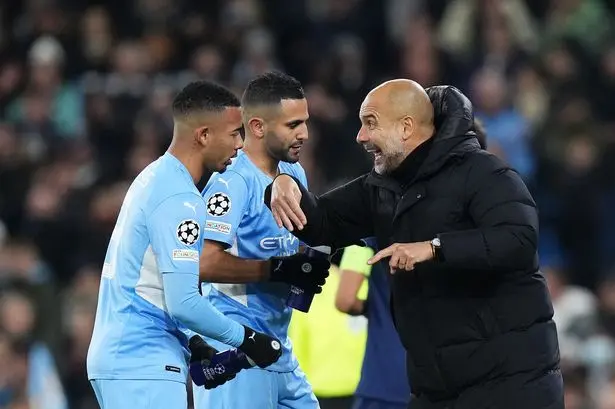
Guardiola has spoken openly about his desire to experience international management – stating in 2022 that he would like to coach at a World Cup or European Championship at some stage in his career.
His connection to Italian football is biographical, not merely sentimental: spells at Brescia and Roma as a player left an imprint, and La Gazzetta dello Sport has been the most vocal advocate for what Italian media have branded “Operation Guardiola,” citing those formative ties as the cultural foundation for a credible candidacy.
The most prominent endorsement has come from Leonardo Bonucci, the former Azzurri captain who served as Gennaro Gattuso’s assistant until the play-off elimination.
“If there’s a genuine desire to start again,” Bonucci stated, “I’d do so with the rumoured possibility of having Pep Guardiola, because bringing him would mean making a drastic change from the past. I think it’s very hard, but dreaming doesn’t cost anything.”
The honesty of that final clause – dreaming doesn’t cost anything – is precisely the problem.
It does, in fact, cost approximately €25 million per year, which is roughly what Guardiola earned at Manchester City.
The FIGC’s budget for a national team coach sits in a different universe entirely.
There is also the matter of his post-City arrangement: Guardiola will transition into a global ambassador role for the City Football Group, a formal institutional tie that complicates any immediate full-time commitment elsewhere.
Italian and international media alike have noted that any serious approach from the FIGC would require external financial sponsorship to bridge the salary gap – a creative structure that is easier to imagine than to execute.
For further context on the shape of this speculation, our earlier coverage of the Guardiola-Italy link sets out the competing dynamics in detail.
The Azzurri Vacancy: A Crisis Too Long in the Making
The vacancy itself is layered with institutional complication. Gattuso’s tenure ended in the most painful circumstances possible – elimination in the play-off, a failure that belongs to a cycle of dysfunction stretching back nearly a decade.
Yet the FIGC cannot formally appoint a successor until after June 22, 2026, when a new federation president will be elected.
That procedural constraint means Italy’s coaching search is, at present, running entirely on speculation and positioning rather than genuine negotiation.
The federation’s pattern – crisis, public debate, delayed resolution – is depressingly familiar.
Fabio Capello, the former Italy coach whose managerial authority commands respect in these conversations, offered a characteristically lucid assessment of the Guardiola idea: “The national team coach is a different job; you don’t work with the team every day, and that’s where the difficulty lies.
You are not a coach, you are a selector.” Capello acknowledged Guardiola’s quality without reservation, but pointed to the structural mismatch – that Guardiola is conditioned to acquiring the players his system demands, whereas the Nazionale requires the opposite instinct: finding what already exists and making it work.
The Realistic Candidates: Who Is Actually in the Frame
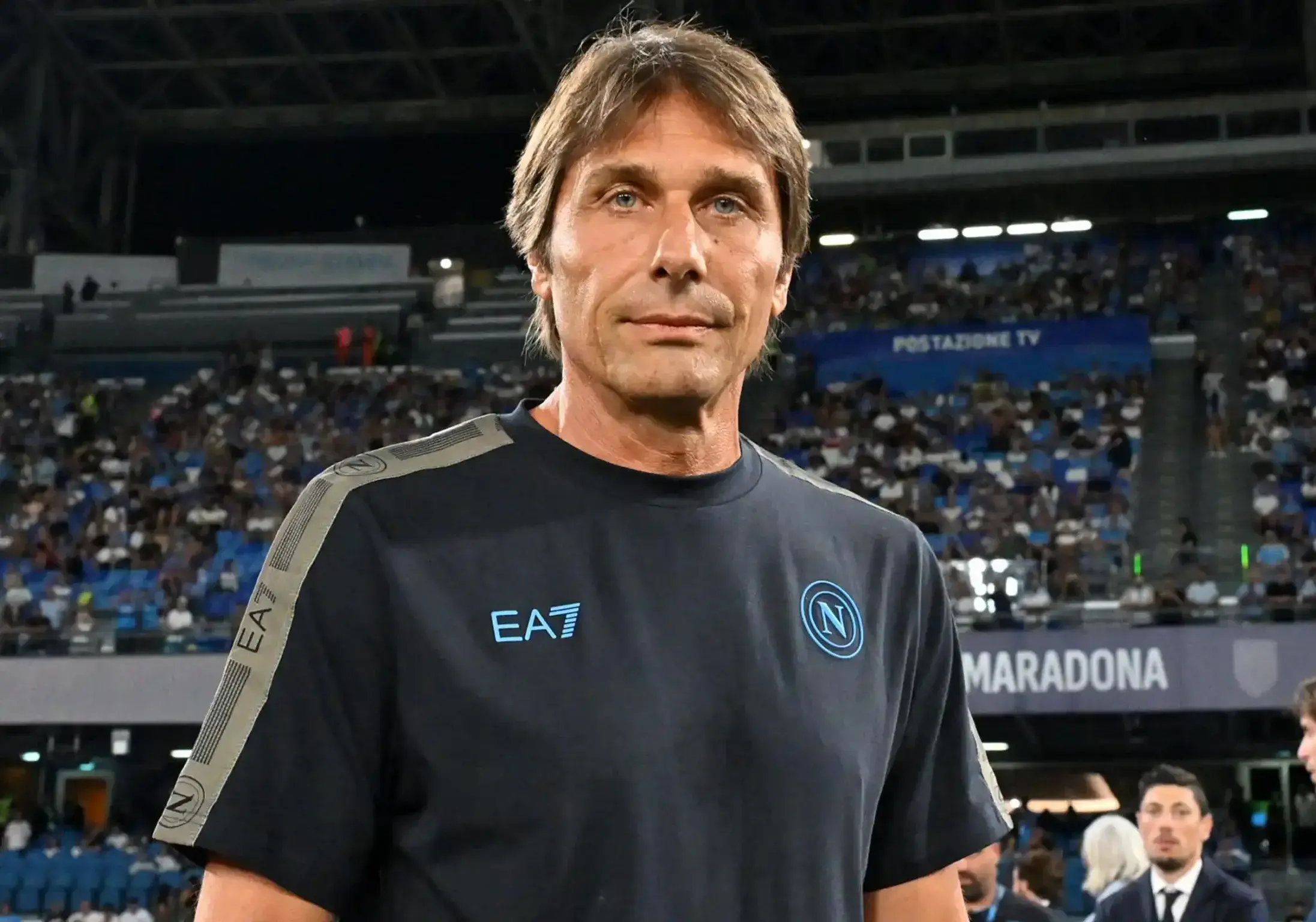
Antonio Conte remains the name that generates most genuine heat among the realistic options, though his candidacy carries its own complications.
Conte’s club record is exceptional; his appetite for total control and high-intensity preparation is harder to reconcile with the rhythms of international football and the compressed windows it offers.
Whether Conte and the FIGC’s new leadership can align on authority and ambition is the central question – as speculation around Conte’s availability has consistently underlined.
Massimiliano Allegri occupies curious ground – a coach of genuine pedigree whose recent club spell ended in acrimony, whose relationship with modern tactical innovation remains contested, and whose appeal rests largely on his record of extracting results from imperfect materials.
That last quality is not nothing for a national team job.
But Allegri as an appointment would signal consolidation rather than transformation, and Italy’s situation demands more than consolidation.
Claudio Ranieri and Roberto Mancini complete the quartet of domestically credible names.
Ranieri, whose extraordinary career earned universal admiration, has previously indicated reluctance to take the role; Mancini, whose 2021 European Championship triumph was Italy’s last moment of genuine collective joy, carries the baggage of a chaotic and damaging exit from the post.
Neither feels like the answer for a federation that needs to rebuild institutional trust as much as it needs a coach.
What the Search Reveals About Italian Football
That Guardiola’s name is being treated as a serious point of debate – rather than an obvious fantasy – is itself the story.
It reveals the scale of Italian football’s internal failure to produce a credible, universally compelling domestic candidate for its own national team.
The debate is a symptom: the FIGC’s repeated cycle of crisis, committee, and delay has narrowed the field of plausible options to a set of familiar names, each carrying significant caveats, and one impossible dream.
Guardiola, as his influence on Italian coaching figures like Enzo Maresca illustrates, represents a philosophy that Italian football admires from a safe distance but has never fully absorbed.
Whether the federation possesses both the financial creativity and the institutional coherence to pursue him seriously – or whether June 22 simply produces another familiar appointment with familiar limitations – remains, as ever, the only question that matters.