The Rossoneri’s managerial search has entered its decisive phase.
What began as a sprawling exercise in speculation – names floated, candidates courted, timelines extended – is now narrowing with purpose around one figure: Oliver Glasner.
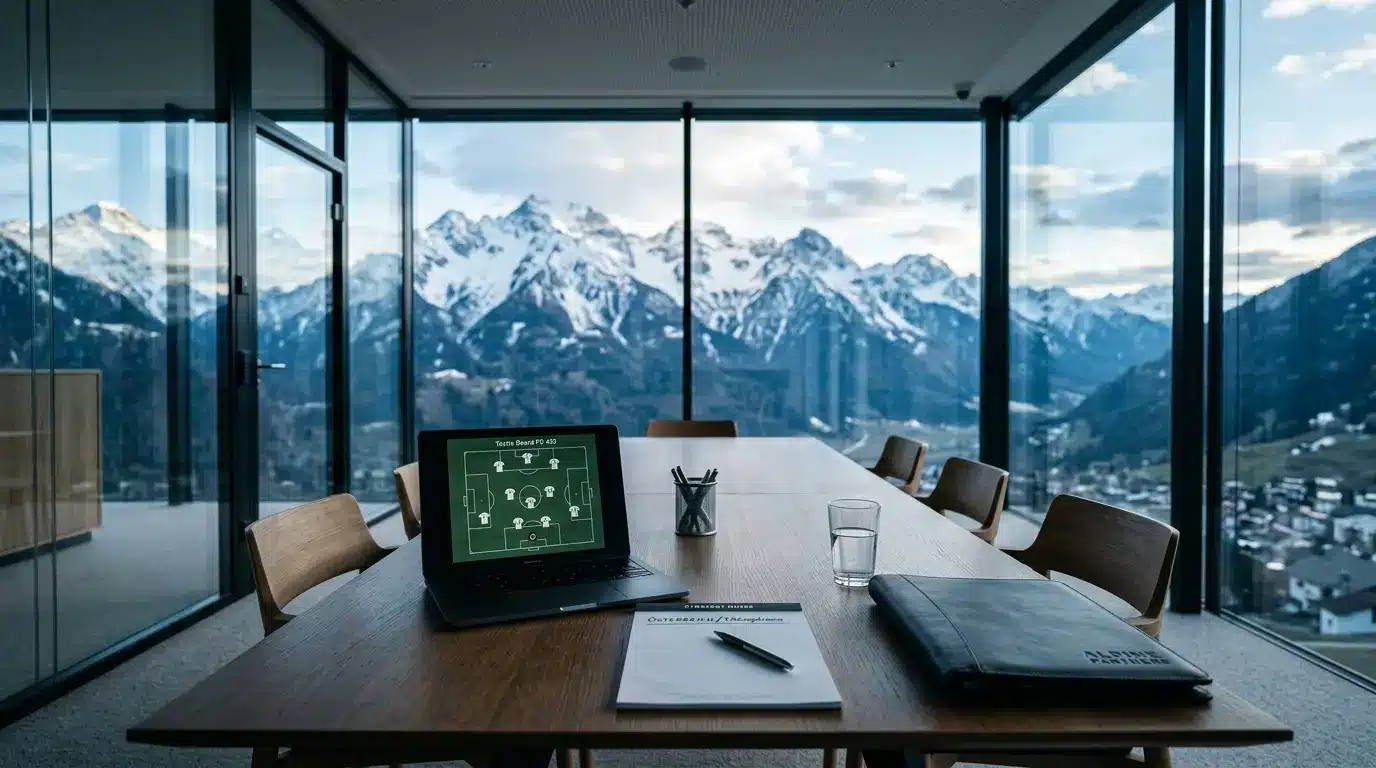
According to La Gazzetta dello Sport, Milan have scheduled a meeting in Austria with the Austrian coach, with the encounter framed explicitly as a job interview – a structured presentation in which Glasner will lay out his vision for the squad, his tactical demands, and his assessment of what the club needs to rebuild. The story has moved.
The Candidate: A Conference League Winner Built for Exactly This Moment
Oliver Glasner arrives at this moment carrying uncommon momentum.
His Crystal Palace side claimed the UEFA Europa Conference League last week – his third trophy as a head coach and, more significantly, his first piece of major European silverware – and he did so without the structural advantages that clubs of Milan’s stature can offer.
Before Palace, Glasner led Eintracht Frankfurt to the Europa League title in 2022, defeating clubs with far greater resources through tactical discipline, pressing intensity, and an ability to foster collective identity in squads that had no obvious right to win.
That capacity to extract more than the sum of available parts is precisely the quality that defines a manager suited to a rebuild – and that is, unmistakably, what Milan now face.
He is also a free agent. No compensation fee, no release clause, no protracted negotiation with a reluctant employer.
For a club attempting to reconfigure its entire sporting structure simultaneously, that simplicity is not incidental.
The Search: Why the Shortlist Has Converged Here
Milan’s vacancy did not arrive cleanly. The departure of the previous regime left the club without a clear identity or a settled recruitment structure, and the subsequent search ranged widely before circumstance – and clear thinking – began to impose order.
Andoni Iraola, strongly linked by Italian media in the search’s earlier weeks, has since moved toward Liverpool, effectively closing that avenue.
Arne Slot remains in consideration but is currently viewed as marginally behind Glasner in the club’s hierarchy of preference, per Gazzetta. The Austrian’s recent European success has sharpened his appeal considerably.
What makes the Austria meeting particularly significant is its dual purpose. Ralf Rangnick – the former RB Leipzig and Austria national team architect currently viewed as the leading candidate for Milan’s sporting director role – is understood to be part of the same coordinated process.
The club is not merely seeking a coach; it is attempting to install a coherent footballing identity from the director’s office downward.
Glasner and Rangnick are seen as tactically and culturally compatible, and the Tuesday meeting appears designed to test that alignment in practice.
What Glasner Would Bring: The Tactical and Cultural Case
Glasner’s football is proactive, high-intensity, and structurally demanding – the kind of approach that requires full buy-in from the squad and significant work on the training ground.
He is not a passive manager who works within the limitations presented to him; he identifies what a squad needs and states it clearly.
Reports indicate that Glasner and his staff are preparing a detailed written analysis of Milan’s current roster – identifying who should remain, who should be moved on, and where reinforcements are required.
That level of preparation signals both professional seriousness and a clear-eyed understanding of what he is walking into.
It also suggests that the club’s ongoing transfer planning for the summer would be substantially shaped by his input from the outset, rather than inherited as a fait accompli.
His man-management record in difficult dressing rooms – Frankfurt and Crystal Palace both required significant cultural resets – further strengthens the case for a club where morale and cohesion have been tested.
The Complications: Open Questions Around a Club in Flux
None of this proceeds without complication. Milan will not participate in Champions League football next season, a factor that inevitably shapes the calibre of player the club can attract and retain.
It is not a trivial obstacle, and no incoming manager should be expected to treat it as one.
Squad uncertainty compounds the challenge. The situation surrounding Luka Modric remains unresolved, with the Croatian’s future directly tied to the incoming manager’s vision.
And the potential departure of Rafael Leão – whose situation, as our coverage of Barcelona’s interest underlines, remains genuinely live – would represent a fundamental change to the attack that any new coach must plan around, not simply absorb.
The Rangnick appointment is also not yet confirmed. The entire model depends on both men arriving together; if the director structure remains unsettled, the coaching appointment loses some of its coherence.
What Comes Next
The Austria meeting is the pivot point. If Glasner’s presentation satisfies Milan’s hierarchy – and if parallel conversations with Rangnick reach the necessary conclusions – the club could move toward formal confirmation of its new tandem within days, with summer recruitment strategy following immediately behind.
Milan have spent too long in this search already. The window is open, rivals are moving, and the club needs certainty – in the dugout, in the director’s office, and in the identity it intends to project.
Tuesday in Austria may well be where that certainty begins. Or it may produce further deliberation, as Italian football’s great rebuilding projects so often do.