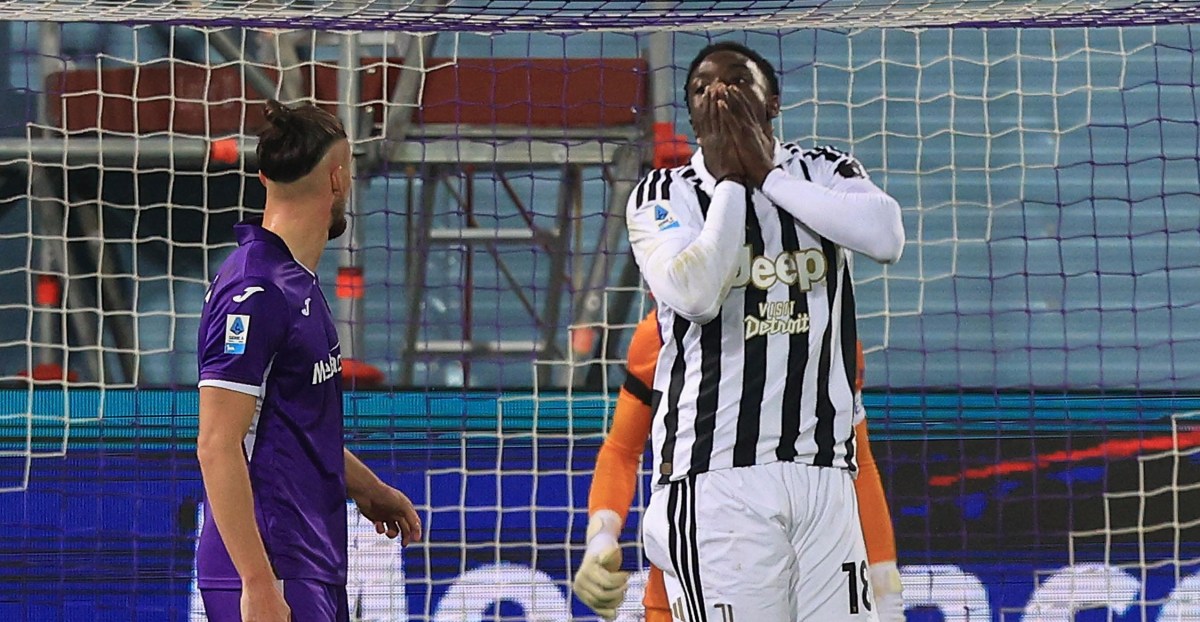
In the closing stages of Juventus’ 2-2 draw against Fiorentina two weekends ago, striker Jeff Ekhator missed a close-range header over the bar that could’ve given the Bianconeri a 3-2 lead in the closing minutes.
The chatter began immediately.
Here on the BWRAO game thread, demands popped up to justify the investment that was made in Ekhator this summer. Similar comments appeared on other platforms. In the WhatsApp chat run by the supporters’ club I’m a part of, one person referred to his goalscoring stats at Genoa (five goals in 57 caps), suggesting they represented the high end of his potential.
Meanwhile, I was rolling my eyes hard enough I probably looked like the Undertaker.
From where I stood, it was a pretty ridiculous direction for the discourse to take. Ekhator was only playing his second official game a a Juventus player after suffering a quad injury in the team’s first preseason game in the summer. As of my writing this, he had played *checks notes* 24 minutes of football in the week that he’d been back.
It all felt, to quote a fashion designer I once saw on TV, like I was taking crazy pills.
It’s not that I think Ekhator should be immune to criticism. That header he missed really was a shot that needs to be put on frame. What blows me away is the outright dismissal of a player who had the temerity to not be peak Lionel Messi at the age of 19 (he turned 20 a few days after the game) after missing a couple of months of action and not being close to fully up to game speed.
This is an attitude that isn’t remotely confined to Juventus — indeed, it’s pervasive when it comes to young players throughout Italy, which is one of the biggest reasons the national team is in the state it’s in today — but it’s been pervasive in the fan base, especially in the last five or six years as the team’s fortunes have declined.
It can be natural — especially when a team has been in a long-term downturn like Juventus has — to hope that any given player can be the silver bullet that arrests the slide and puts the team back on a victorious path. But deciding a player is rubbish the instant they don’t show a development curve akin to that of Kylian Mbappe is a terrible approach to player development. It flat-out ignores the simple fact that players will develop in different ways, and it piles on inordinate amounts of pressure for players to live up to expectations as fast as possible. Look at the handful of young goalkeepers that were labeled the “next Buffon” over the years, or the unfortunate moniker of “next Del Piero” that was saddled on poor Sebastian Giovinco, only for those players to be thrown aside while they were still in the middle of actually developing.
It may take a talented player a few more years to break out than another. Take Ciro Immobile, for instance, whose development curve looked more like a Richter scale, spiking after going from Juve to Torino, then dropping off after he went abroad before going back up after he got to Lazio. It took him a while, but he ultimately ended up a two-time capocannoniere and co-holder of the Serie A record for goals in a season. Certainly a player you’d want to have in your squad, no?
Coming back around to Ekhator, there’s every reason to believe that with some opportunity he be a player that can contribute to this team. It’s not every day that any Serie A club gives a player 24 league appearances in his age-18 season, but that’s just what Genoa did two seasons ago. He’s also earned 18 combined caps with the Under-19 and Under-21 national teams (scoring five times) and was summoned for his first appearance with the senior team over the summer. There’s clearly talent in this kid.
But he hasn’t scored a goal in his first 24 minutes of football for Juventus this season after a long injury layoff, so clearly he must be rubbish, right?
There’s plenty of time for Ekhator to actually develop a real sample size before we can start slinging invectives at the kid. Let’s all have a little common sense.